


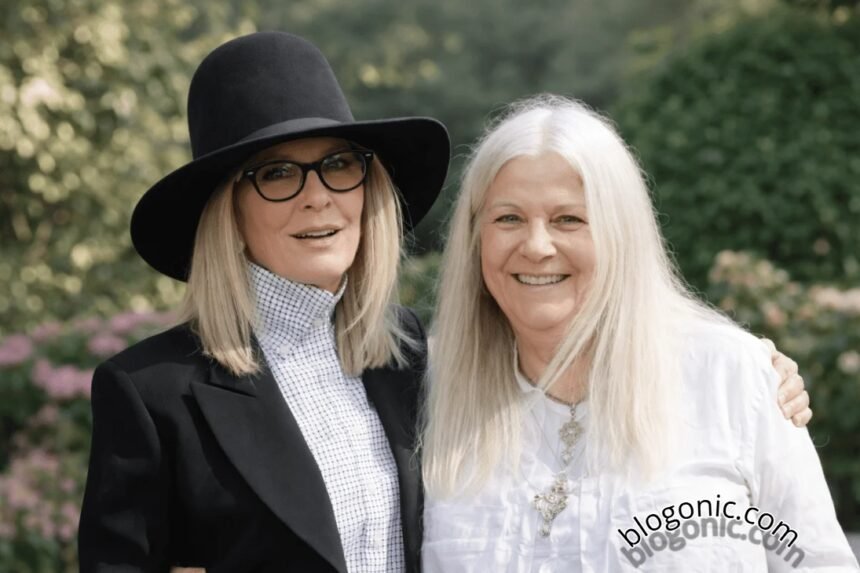
anThere are people in Hollywood who live at the center of the frame — and there are people who have always preferred to stand just outside it. Dorrie Hall belongs firmly in the second category. Born on April 1, 1953, in Los Angeles, California, she is the youngest sibling of Academy Award-winning actress Diane Keaton. For the better part of seven decades, she has built a life that brushes constantly against the edges of celebrity yet remains genuinely and deliberately her own.
Her name appears in Hollywood discussions not because of anything she sought, but because of who she was born beside. Diane Keaton — born Diane Hall, the same surname Dorrie carries — is one of American cinema’s most beloved figures. The star of Annie Hall, The Godfather, and Something’s Gotta Give, Keaton brought the Hall family name into cultural conversation. Naturally, her quieter siblings — particularly Dorrie — became objects of public curiosity.
Yet Dorrie Hall is far more than a footnote in her sister’s biography. Her professional story is limited but genuine — film industry credits, a long career built around antiques, aesthetic expertise, and trusted creative collaboration. At the 50th Academy Awards in 1978, she stood beside Diane on one of cinema’s greatest nights. In 1987, she appeared in Diane’s documentary Heaven. Later, in 2022, she supported her sister at the TCL Chinese Theatre hand and footprint ceremony. Through all of it, she kept her personal life exactly as private as she wanted it.
This article tells the full story of Dorrie Hall — her family background, her childhood in Southern California, her film credits, her antiques career, her relationship with Diane Keaton, and why a woman this deeply connected to Hollywood remains one of its most genuinely private figures.
Family Background: The Hall-Keaton Household
Dorrie Hall grew up in a home shaped by two distinct parental personalities — one practical, one deeply artistic — and the combination created a household rich in both structure and creative expression.
Her father, Jack Newton Hall (also known as John Ward Hall), worked as a civil engineer and real estate broker. A methodical, analytical mind, he built things, managed assets, and approached the world with precision. Civil engineering brought financial stability to the family, while real estate gave him a deep understanding of spaces, property, and value.
Her mother, Dorothy Deanne Hall — born Dorothy Deanne Keaton — was a homemaker with a genuine creative gift. She was an amateur photographer who loved preserving family moments and stories through images. Photography, for Dorothy, was not a passive hobby. It was an active, intentional practice — seeing the world carefully and recording what mattered before it passed. That sensibility became part of how all four Hall children understood beauty, memory, and the importance of paying attention.
A Southern California Upbringing
The Hall family maintained strong ties to the Los Angeles area throughout Dorrie’s childhood. Growing up in Southern California — in the shadow of, but not inside, the entertainment industry — gave the Hall children a particular vantage point. Hollywood was close. Its culture, its aesthetics, its people moved through the world around them. Yet the family’s own home operated on different principles: education, creativity, discipline, and emotional grounding over professional ambition.
From an early age, the Hall home exposed all four children to art, storytelling, and visual culture. Family routines included artistic exploration alongside ordinary domestic life. That exposure shaped each sibling differently. Diane channeled it into acting. Dorrie channeled it into something quieter — a lifelong attraction to beautiful objects, aesthetic spaces, and the stories that old things carry with them.
Siblings: Growing Up With Diane Keaton
To understand Dorrie Hall’s life, one must understand the sibling structure she grew up in. She is the youngest of four children — and the youngest by a significant margin. Her older sister Diane Keaton was born in 1946, making her seven years Dorrie’s senior. Two brothers, Randy Hall and Robin Hall, complete the family.
Diane’s path toward acting began during her childhood and accelerated dramatically during her teenage years and early twenties. By the time Dorrie was a teenager herself, Diane was already living in New York, studying at the Neighborhood Playhouse, and beginning the career that would lead to Annie Hall and global recognition.
What That Age Gap Meant
The seven-year gap between Diane and Dorrie is significant. By the time Dorrie was forming her clearest childhood memories, Diane was already becoming a public figure. That dynamic — growing up with a sister who was simultaneously family and famous — creates a particular kind of experience. From the inside, you watch someone you love. From the outside, the world watches them too. The private truth of who someone really is coexists with the public perception of who they are meant to be.
Dorrie navigated that position with consistent grace. Rather than leveraging her famous sister for personal gain or seeking the media’s attention by virtue of their relationship, she simply remained what she had always been — Diane’s younger sister, a person in her own right, with her own interests, her own career, and her own life.
Education and Early Adult Years
Detailed public records about Dorrie Hall’s formal education do not exist — a reflection of both the era and her deliberate commitment to privacy. Nevertheless, what is clear is that she grew up in a family that emphasized education, cultural exposure, and creative development. The values her parents instilled — curiosity, attention to detail, and respect for craftsmanship — shaped not just her character but her eventual professional path.
Discovering Antiques and Objects
At some point during her early adult years, Dorrie developed a deep interest in antiques — in the history, craftsmanship, and aesthetic value of old objects. Consequently, this became a professional practice. She developed expertise as an antiques picker and dealer — someone who finds, evaluates, acquires, and places significant objects in the hands of those who will value them.
That career, built quietly and without public announcement, reflects everything most consistent about Dorrie Hall: a preference for substance over display, a commitment to quality over visibility, and an understanding that meaningful work often happens in the margins of public attention.
Film Credits: Brief but Genuine
Dorrie Hall holds two verified film industry credits — modest in number but genuine in character, and entirely consistent with how she has approached everything else in her professional life.
Heaven (1987)
In 1987, Diane Keaton directed Heaven — a documentary film exploring what people from various walks of life believe about the afterlife. The film drew on interviews with dozens of individuals, weaving together perspectives on death, faith, and what comes next. Dorrie Hall appeared in the film as herself — one of the genuine voices Keaton included in her exploration.
This appearance is telling. Diane chose to include her sister not as a celebrity sibling cameo but as an authentic human voice. Dorrie’s presence in a film about the deepest questions of human existence suggests that she brought something real and thoughtful to the conversation — not a performance, but a genuine perspective.
The Boost (1988)
In 1988, Dorrie worked on the feature film The Boost as a production secretary — a behind-the-scenes administrative role that keeps film productions organized and moving. The Boost starred James Woods and Sean Young in a story about cocaine addiction in the 1980s. Working as a production secretary placed Dorrie in a genuine professional capacity within the industry — not as a celebrity’s sister, but as a working member of a production team with real responsibilities.
These two credits — one appearance as herself, one behind-the-scenes administrative role — represent the full extent of her verified film industry participation. After 1988, no additional industry credits appear in major databases. Her professional life shifted away from film entirely and toward the antiques world she had already been developing.
Career as an Antiques Dealer and Picker
The most sustained and genuine chapter of Dorrie Hall’s professional life is one that generates little search traffic and almost no media coverage — which is, in itself, telling. She built a career as an antiques dealer, picker, and interior collaborator that operated on expertise, reputation, and word of mouth rather than publicity.
What an Antiques Picker Actually Does
An antiques picker is a specialist who searches estate sales, auctions, private collections, and obscure markets for objects of genuine value — aesthetic, historical, or material. The role requires a trained eye, deep product knowledge, strong sourcing networks, and the patience to develop expertise over years rather than months. It is fundamentally a research-and-curation profession, demanding exactly the kind of quiet, sustained attention that defines Dorrie Hall’s broader approach to life.
Her work in this field connected organically to the values her parents modeled — her mother’s visual attention, her father’s understanding of value and property. The family’s emphasis on aesthetic awareness and careful observation translated directly into professional competence in a field that rewards both.
The Connection to Diane Keaton’s Aesthetic World
Diane Keaton is well known, beyond acting, for her distinctive and serious engagement with architecture and interior design. She has renovated multiple historic properties, collaborated with designers, and written publicly about her passion for visual spaces and objects. In that context, Dorrie’s expertise in antiques and aesthetic objects made her a natural, trusted collaborator within her sister’s creative world.
Their collaboration was not transactional or publicly announced. Rather, it reflects the organic way that genuine expertise circulates within trusted circles. Dorrie’s authority came from experience and reliability. Designers and collectors returned to her because she delivered. Over time, that reliability became her professional signature.
Public Appearances: Rare but Meaningful
Despite her deep commitment to privacy, Dorrie Hall has made a small number of documented public appearances alongside her sister. Each one is notable precisely because of how infrequent they are.
50th Annual Academy Awards (1978)
On April 3, 1978, Dorrie Hall attended the 50th Annual Academy Awards at the Dorothy Chandler Pavilion in Los Angeles. She accompanied Diane Keaton — who that evening took home the Academy Award for Best Actress for Annie Hall. Photographs from the ceremony, credited to photographers Ron Galella and Gary Lewis, show Dorrie standing alongside her sister during one of the most significant nights in Diane’s career.
For Dorrie, this moment carries its own kind of weight. She was there — not as a background figure, but as family, as witness, as the person who knew Diane before Hollywood did. That version of sisterhood — private, present, and deeply human — is precisely the one Dorrie has always represented.
Diane Keaton’s TCL Chinese Theatre Ceremony (2022)
On August 11, 2022, Diane Keaton received the honor of having her hand and footprints preserved in cement at the TCL Chinese Theatre in Hollywood — one of the entertainment industry’s most iconic traditions. Dorrie attended this ceremony alongside the family.
The appearance, documented in photographs from the event, showed Dorrie at 69 years old — composed, private, and present for her sister’s milestone. The sight of her there, decades after the 1978 Oscars, completing a kind of quiet arc of sisterly support across half a century of Diane’s career, was genuinely moving for those who knew the full context of their relationship.
The Sisterhood: Dorrie and Diane Keaton
The relationship between Dorrie Hall and Diane Keaton is, by all available evidence, genuinely close. Not in the manufactured way of celebrity siblings who coordinate appearances for media attention, but in the quiet, enduring way of people who grew up together and have never stopped knowing each other.
Diane Keaton’s memoir Then Again touches on family relationships and the Hall household. Indeed, the book reflects a deep appreciation for the family that shaped her — including the sister who grew up in the shadow of rising fame without ever resenting it or seeking a spotlight of her own.
A Rare and Enduring Dynamic
Their dynamic — famous sister and private sister, public life and private life, Hollywood center and Hollywood margin — represents a genuinely rare configuration. Most siblings of famous people eventually succumb to the gravitational pull of proximity to celebrity — writing the memoir, giving the interview, appearing on the reality show. Dorrie Hall, however, has done none of these things across more than four decades of her sister’s global fame. That restraint is not passivity. It is character.
What Their Bond Reflects
Above all, the bond between Dorrie and Diane reflects a shared understanding of what family actually means. It is not about coordinating public images or leveraging connections. Rather, it is about showing up — privately, consistently, and without agenda — across a lifetime of milestones and ordinary moments alike.
Why Dorrie Hall’s Story Matters
In an era of celebrity-adjacent content — where cousins of famous people build Instagram empires and distant relatives sell their connections to the tabloids — Dorrie Hall represents something genuinely different.
Her story matters, first and foremost, because it demonstrates that a meaningful life can be built in proximity to extraordinary fame without being consumed by it. Growing up with Diane Keaton, attending the Oscars, working in film production, and collaborating with creative figures — through all of it, she remained herself. Grounded, private, and defined entirely by her own choices rather than someone else’s headlines.
A Counter-Argument to Modern Celebrity Culture
Furthermore, her antiques career reflects a commitment to quality over visibility, to expertise over platform, and to the kind of long-term professional credibility that cannot be manufactured or purchased. That career model — build trust through consistency, let the work speak, refuse to perform your credentials — is increasingly rare. In a culture that rewards self-promotion above almost everything else, moreover, it is increasingly valuable.
If you enjoyed reading this, discover more celebrity insights: Kristina Sunshine Jung Net Worth: Her Career, Family Legacy, and Life Today
FAQS
Who is Dorrie Hall?
Dorrie Hall is an American woman born on April 1, 1953, in Los Angeles, California. She is best known as the younger sister of Academy Award-winning actress Diane Keaton. Beyond that family connection, she holds two verified film industry credits — an appearance in Diane’s 1987 documentary Heaven and a production secretary role on The Boost (1988) — and has built a career as an antiques dealer and picker.
How is Dorrie Hall related to Diane Keaton?
Dorrie Hall is Diane Keaton’s younger sister — the youngest of four siblings in the Hall family. Their parents were Jack Newton Hall, a civil engineer and real estate broker, and Dorothy Deanne Hall (née Keaton), a homemaker and amateur photographer. Diane was born in 1946 and Dorrie in 1953, making them seven years apart in age.
What are Dorrie Hall’s film credits?
Dorrie Hall has two verified film credits. She appeared as herself in Heaven (1987), a documentary directed by her sister Diane Keaton. She also worked as production secretary on the feature film The Boost (1988), starring James Woods and Sean Young. No additional film or television credits appear in major industry databases after 1988.
Has Dorrie Hall ever appeared publicly with Diane Keaton?
Yes, on two notable documented occasions. She attended the 50th Annual Academy Awards on April 3, 1978, where Diane Keaton won Best Actress for Annie Hall. She also appeared at Diane Keaton’s hand and footprint ceremony at the TCL Chinese Theatre in Hollywood on August 11, 2022. Both appearances were photographed and documented publicly.
What is Dorrie Hall’s professional background outside of film?
Beyond her two film industry credits, Dorrie Hall built a career as an antiques dealer and picker — a specialist in sourcing, evaluating, and placing antique objects. Her expertise in visual aesthetics and old objects reportedly made her a trusted collaborator within Diane Keaton’s well-documented world of architecture and interior design. She has maintained this professional identity largely outside public attention.
Conclusion
Dorrie Hall is Diane Keaton’s younger sister — and she is also, in ways that deserve genuine recognition, her own person entirely. Born into the same household that produced one of American cinema’s most beloved actresses, she absorbed the same family values, the same aesthetic sensibility, the same Southern California backdrop. Yet she took all of those materials in an entirely different direction: toward antiques, toward discretion, toward professional expertise that circulates through trust rather than publicity.
At the Academy Awards, she stood beside Diane when her sister won. In the 1987 documentary, her voice added something genuine. At the TCL Chinese Theatre, she appeared again — quietly present for another milestone. At every turn, she demonstrated the most consistent quality of her character: showing up for family without making the moment about herself.
In a family famous for performance, Dorrie Hall chose presence and In an industry built on visibility, she chose expertise. In a culture obsessed with fame, she built a quiet life of substance — and she did it for seven decades, without flinching and without complaint.