

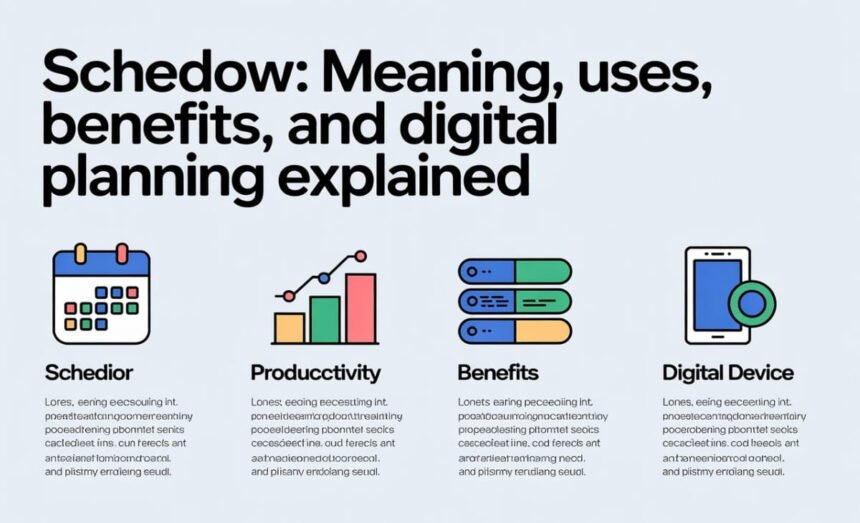
Effective planning has become a critical skill in the digital age. As work environments grow more dynamic and responsibilities increase, traditional scheduling methods often fail to keep up. This shift has created space for new concepts that better reflect how people actually plan and execute tasks today.
One such concept is schedow. While the term may sound unfamiliar, the idea behind it is highly relevant. It represents a modern approach to organizing time, tasks, and priorities in a flexible yet structured way.
Rather than relying on rigid schedules, It focuses on adaptive planning. It recognizes that plans change, priorities shift, and productivity is not always linear. This makes schedow especially useful in digital workflows, remote work, and creative environments.
In this article, we’ll explore what schedow means, how it is applied, and why it matters in today’s planning systems. The goal is to provide a clear, evergreen understanding that applies across industries and use cases.
Understanding the Concept of Schedow
It blends structured scheduling with flexibility, allowing tasks to move and adapt without losing clarity or direction.
Traditional scheduling often focuses on dates and deadlines. While useful, this approach can become restrictive when real-world conditions change. It addresses this limitation by emphasizing task flow and priority alignment instead of static timelines.
This concept aligns closely with modern productivity research. Studies and insights shared by platforms like Harvard Business Review highlight that adaptive planning leads to better performance in knowledge-based work environments.
It also reflects how digital tools have evolved. Many modern platforms now prioritize flexible task boards, rolling timelines, and smart reminders instead of fixed calendar-only systems.
Core Principles Behind Schedow
It is built on several key principles that define how it works in practice:
- Planning that adapts to changing priorities
- Focus on task progress rather than strict deadlines
- Balance between structure and flexibility
- Support for human decision-making, not just automation
These principles make schedow applicable across personal, professional, and organizational planning contexts.
How Schedow Fits into Modern Digital Workflows
Digital workflows are rarely linear. It fits into this reality by allowing plans to evolve without breaking the entire system.
In remote and hybrid work environments, It becomes even more valuable. Teams often work across time zones and schedules, making rigid planning ineffective. Adaptive planning helps maintain momentum while respecting flexibility.
Schedow also supports asynchronous work. Instead of forcing everyone into the same timeline, it allows tasks to progress based on readiness and priority. This improves efficiency and reduces unnecessary pressure.
Many modern project management platforms already operate on schedow-like principles. Tools discussed by Atlassian, for example, emphasize iterative planning and task flow rather than fixed scheduling alone.
Practical Applications of Schedow
It is not limited to one industry or role. Its flexibility allows it to be applied in many real-world scenarios where planning and execution must coexist.
Content creators, for example, often use schedow-style planning. Instead of assigning fixed publishing dates far in advance, they work with content pipelines that adapt based on workload, quality, and audience response.
Software development teams also benefit from schedow thinking. Agile and hybrid methodologies rely on adaptive timelines that shift as projects evolve. This makes schedow a conceptual foundation rather than a separate system.
Common Areas Where Schedow Is Applied
Schedow-based thinking can be observed in the following areas:
- Digital project and task management systems
- Editorial and content planning workflows
- Agile, sprint-based work environments
- Personal productivity and goal-setting frameworks
These use cases show that schedow supports both individual and collaborative planning needs.
Benefits of Using a Schedow-Based Approach
It also improves focus. By prioritizing tasks based on importance and readiness, individuals can work more intentionally instead of reacting to rigid schedules.
Another benefit is improved collaboration. Teams using schedow principles communicate more clearly about priorities and dependencies, which reduces confusion and delays.
Over time, It helps build sustainable productivity. Instead of pushing constant urgency, it encourages steady progress aligned with real capacity.
Schedow and Human-Centered Planning
Modern planning systems must serve people, not control them. It supports this idea by keeping humans in charge of decisions while using structure as a guide.
Automation plays a role, but schedow does not rely on automation alone. It recognizes that judgment, creativity, and context are essential in planning.
This human-centered approach aligns well with user experience and product design trends. Platforms that offer flexibility tend to see higher engagement and long-term adoption.
It also supports mental well-being. Flexible planning reduces burnout by allowing room for adjustment without guilt or failure.
Why Schedow Matters Long-Term
As digital work continues to evolve, planning systems must evolve with it. Fixed schedules are increasingly incompatible with complex, fast-changing environments.
It offers a future-ready approach. It supports growth, experimentation, and adaptation without sacrificing clarity or accountability.
For businesses, It improves resilience. For individuals, it improves control and balance. For teams, it improves coordination and trust.
This is why schedow is not just a trend, but a reflection of how planning is changing at a fundamental level.
Conclusion
It represents a smarter, more realistic way to plan in the modern world. It accepts that change is inevitable and designs planning around that reality.
By adopting It principles, you can create systems that support progress instead of restricting it. Whether you manage projects, content, or daily tasks, It helps align intention with execution.
If you’re building a platform, blog, or workflow around planning and productivity, understanding schedow gives you a strong conceptual foundation. Start small, stay flexible, and let schedow guide your planning decisions toward sustainable success.
FAQs
What is schedow in simple terms?
It is a flexible planning concept that combines scheduling with adaptive task flow.
Is schedow a software or a framework?
It is a concept that can be applied across tools, workflows, and planning systems.
How does schedow improve productivity?
It reduces rigid deadlines and focuses on realistic priorities and steady progress.
Can schedow be used for personal planning?
Yes, It works well for personal goals, routines, and daily task management.
Why is schedow important in digital work?
Because digital workflows require flexibility, collaboration, and adaptive planning.