


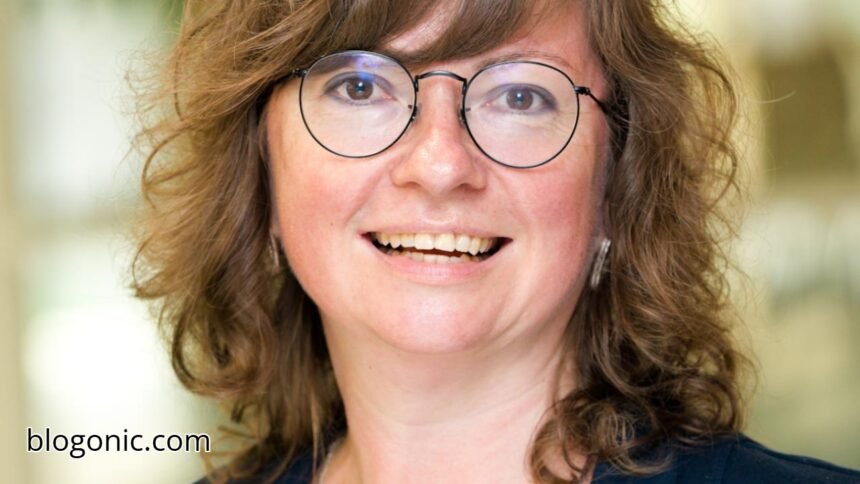
Climate journalism has grown into an important beat in modern media. Additionally, few names are as closely tied to this field in the Russian and Eastern European context as Angelina Davydova. For nearly two decades, she has reported on climate policy. She has also covered environmental economics and international negotiations. As a result, she has turned dense policy language into stories that readers, NGOs, and students can actually understand.
This article explores who Angelina Davydova is. It also looks at her professional background, her role in covering United Nations climate talks, her podcast work, and her academic contributions. Finally, it explains why her journalism matters in today’s climate conversation.
Who Is Angelina Davydova?
Angelina Davydova is an environmental and climate journalist. She is known for her long-term coverage of climate policy, environmental economics, and international climate diplomacy. She writes for a mix of Russian and international outlets. For instance, she has contributed to Kommersant, the Thomson Reuters Foundation, and Science magazine. Beyond writing, she also works as an editor, lecturer, trainer, moderator, and podcast host. Because of this, she stands out as one of the more multidimensional figures in environmental media.
She holds a degree in economics from St. Petersburg State University of Economics and Finance. This background clearly shapes her reporting style. Rather than focusing only on weather events or ecological damage, her work often digs into the economic and political mechanics behind climate policy. In particular, she explains how emissions targets get negotiated, how energy transitions unfold, and how governments respond to international pressure.
Early Life and Path into Journalism
Davydova has explained that her interest in journalism grew gradually rather than through one defining moment. As a teenager, she was drawn to newspapers, politics, and economics. Eventually, she chose to study economics at university during a period of major economic change in Russia. Her early journalism career involved shared bylines. She often contributed pieces to larger stories before developing her own independent voice as a reporter. Notably, she has said that her English language skills opened early opportunities, including reporting linked to international investigations.
This layered entry into journalism shaped her later focus on complex policy topics rather than surface-level news. In other words, she built her expertise step by step, one small contribution at a time.
Career Highlights and Professional Roles
Angelina Davydova’s career spans multiple institutions and roles. This reflects a career built as much around institution-building and education as around reporting itself.
For more than a decade, she served as director of the German-Russian Office of Environmental Information in St. Petersburg. This non-profit organization focuses on developing environmental journalism across Russia and neighboring countries. At the same time, it promotes cross-border cooperation on environmental and climate issues.
Alongside this, Davydova has taught at the School of Journalism at St. Petersburg State University. She has also taught at the Saint Petersburg National Research University of Information Technologies, Mechanics, and Optics. Furthermore, she gives guest lectures and seminars at universities across Russia, Germany, and the United States. She regularly runs training programs on environmental and climate journalism, writing, and communication for media professionals and NGO staff.
Her career also includes several notable international fellowships. In 2006, she was a Reuters Foundation Fellow at Oxford University. In 2012, she took part in the Beahrs Environmental Leadership Program at UC Berkeley. Then, between 2018 and 2019, she served as a Humphrey Fellow at UC Davis. Together, these fellowships show sustained international interest in her work. They also highlight her role as a bridge between Russian environmental journalism and the global climate reporting community.
In addition, she has served as an editor of the journal Environment and Law. This further cements her role, not just as a reporter, but as a shaper of environmental discourse in Russian media and policy circles.
Covering the United Nations Climate Negotiations
One of the most defining parts of Angelina Davydova’s career is her long-running coverage of the UN climate negotiations, known as the UNFCCC process. Since 2008, she has served as an observer of these negotiations. This gives her a rare, sustained view of how global climate diplomacy has evolved over more than fifteen years.
The UNFCCC process is notoriously complex. It involves overlapping discussions on emissions targets and national pledges, climate finance and funding mechanisms, loss and damage frameworks, adaptation strategies for vulnerable nations, and corporate accountability, alongside ongoing cross-border diplomatic negotiations.
Because of this complexity, journalists who follow the process for only a single year often struggle to put outcomes into context. However, Davydova’s continuous involvement since 2008 has let her build institutional memory. As a result, she can explain not just what happened at one summit, but how it connects to a much longer diplomatic timeline. This long-view perspective partly explains why international organizations and academic institutions frequently seek out her analysis.
The Eurasian Climate Brief Podcast
In addition to written journalism, Davydova co-hosts The Eurasian Climate Brief. This English-language podcast focuses on climate issues across Russia, Central Asia, and Eastern Europe. Through podcasting, she reaches audiences in a more conversational format. This format also offers context, interviews, and regional perspectives that don’t always make it into mainstream global climate coverage.
This format complements her written work well. While articles allow for structured policy analysis, the podcast lets her explore nuance, regional voices, and less formal discussion around climate governance and environmental change.
Relocation to Berlin and Continued Work
Davydova was based in St. Petersburg, Russia, until mid-March 2022. After that, she relocated to Berlin, Germany. Since then, she has continued her environmental journalism work from Berlin while taking on new institutional roles. For example, she became a fellow with Media in Cooperation and Transition (MICT) in Berlin. She also works as a climate journalism coordinator with n-ost, a Berlin-based network for cross-border journalism. Additionally, she is a fellow with the Institute for Global Reconstitution in Berlin and a member of the Ukraine War Environmental Consequences Work Group.
Her relocation has not slowed her output. If anything, these Berlin-based roles have expanded her network into broader European climate journalism circles. Meanwhile, she continues to focus on Russia, Central Asia, and Eastern Europe as her core reporting regions.
Focus on the Environmental Consequences of the Russia-Ukraine War
More recently, Davydova has paid close attention to the environmental consequences of Russia’s invasion of Ukraine. Her involvement with the Ukraine War Environmental Consequences Work Group reflects a broader shift in her reporting. Specifically, she now examines how armed conflict intersects with environmental degradation, energy policy, and long-term climate consequences.
She has also written about how reduced industrial activity in Russia, caused by the war, has led to lower greenhouse gas emissions. However, she cautions that this drop should not be mistaken for genuine, policy-driven decarbonization.
Why Angelina Davydova’s Work Matters
Environmental and climate journalism often faces a core challenge: making highly technical policy discussions accessible without oversimplifying them. Thanks to her economics background, her multi-decade observation of UN climate talks, and her cross-border reporting experience, Davydova manages to translate complex policy shifts into content that different audiences can use.
For instance, general readers can better understand climate policy through her work. NGOs and civil society groups can track government commitments more easily. Students and academics gain a useful resource for researching climate governance. Meanwhile, international organizations rely on her reporting to monitor the Eastern European and Central Asian climate landscape.
Ultimately, her career shows how specialized journalism, built over years of sustained focus rather than short-term coverage, can shape public understanding of complex global issues like climate change.
Recognition and Affiliations
Davydova’s professional network includes memberships in respected international organizations. Since October 2020, she has been a member of the World Future Council. Additionally, organizations such as the Carnegie Endowment for International Peace, Global Diplomacy Lab, and various academic climate research networks have referenced or profiled her work. This reflects the broad institutional recognition of her contributions to environmental journalism.
If you liked this biography, check out our related articles: From Factory Floor to Harvard Hall: The Remarkable Untold Story of Reginald Williams
FAQs
Who is Angelina Davydova?
Angelina Davydova is an environmental and climate journalist. She is known for her reporting on climate policy, environmental economics, and international climate negotiations, primarily focused on Russia, Central Asia, and Eastern Europe.
What is Angelina Davydova known for?
She is known for her long-term observation of UN climate negotiations since 2008. She is also recognized for directing the German-Russian Office of Environmental Information and for co-hosting The Eurasian Climate Brief podcast.
Where does Angelina Davydova currently live?
She was based in St. Petersburg, Russia, until mid-March 2022. Since then, she has been based in Berlin, Germany.
What publications has Angelina Davydova written for?
She has contributed to outlets such as Kommersant, the Thomson Reuters Foundation, and Science magazine, along with various other Russian and international media.
What is Angelina Davydova’s educational background?
She holds a degree in economics from St. Petersburg State University of Economics and Finance.
What fellowships has Angelina Davydova received?
She held a Reuters Foundation Fellowship at Oxford University in 2006. Later, she joined the Beahrs Environmental Leadership Program at UC Berkeley in 2012, and she served as a Humphrey Fellow at UC Davis from 2018 to 2019.
What is The Eurasian Climate Brief?
It is an English-language podcast co-hosted by Angelina Davydova. The podcast focuses on climate and environmental issues across Russia, Central Asia, and Eastern Europe.
Does Angelina Davydova teach?
Yes, she teaches at the School of Journalism at St. Petersburg State University and at the Saint Petersburg National Research University of Information Technologies, Mechanics, and Optics. She also gives guest lectures at universities in Russia, Germany, and the US.
What is Angelina Davydova’s connection to the Russia-Ukraine war?
She is a member of the Ukraine War Environmental Consequences Work Group. In this role, she has written about the environmental impacts of the conflict, including emissions changes linked to reduced industrial activity.
Is Angelina Davydova affiliated with any international organizations?
Yes, she has been a member of the World Future Council since October 2020. She is also affiliated with organizations such as MICT, n-ost, and the Institute for Global Reconstitution in Berlin.
Conclusion
Angelina Davydova represents a rare model of sustained, specialized climate journalism. From her early economics background to her decades-long observation of UN climate negotiations, she has built a career centered on translating complex climate policy into accessible reporting. She has also worked as an editor, lecturer, and podcast host, and more recently, she has focused on the environmental consequences of war. As global climate challenges intensify, journalists like Davydova, with deep institutional knowledge and cross-border perspective, remain essential voices. After all, they help the public understand what is really happening behind climate headlines.